
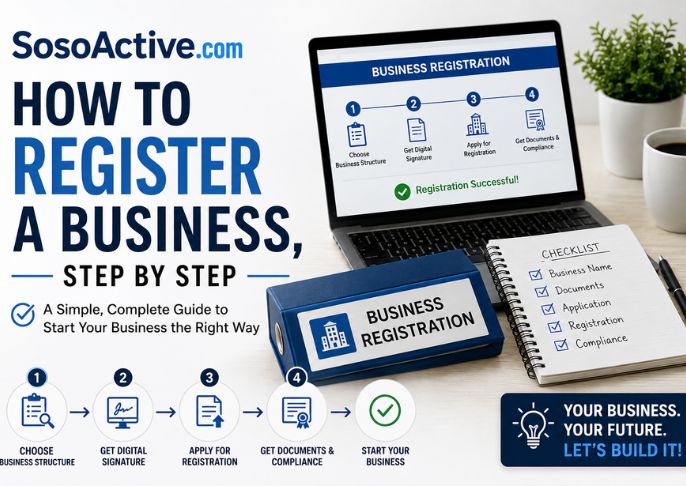
Starting a business is an exciting milestone, but before you begin selling products or offering services, it’s important to register your business properly. Business registration helps establish your company as a legal entity, protects your brand, and ensures you comply with government regulations. Whether you’re launching a small local business or an online startup, following the correct registration process can save you time and avoid legal issues later.
At SosoActive.com, we help entrepreneurs understand the essential steps involved in building and growing a successful business. This step-by-step guide explains how to register a business, what documents you may need, and common mistakes to avoid.
Why Business Registration Is Important – SosoActive.com
Registering your business is more than completing paperwork. It gives your business legal recognition and builds trust with customers, investors, and financial institutions.
Some key benefits include:
- Operate legally under local regulations.
- Open a business bank account.
- Apply for business loans or funding.
- Build credibility with customers.
- Protect your business name.
- Meet tax and licensing requirements.
According to business experts featured on SosoActive.com, proper registration lays the foundation for long-term business success.
Step 1: Choose the Right Business Structure – SosoActive.com
Before registering your business, decide which legal structure best suits your goals.
Sole Proprietorship
A sole proprietorship is owned and managed by one person. It is usually the easiest and least expensive option to start.
Best for:
- Freelancers
- Consultants
- Small local businesses
Limited Liability Company (LLC)
An LLC separates your personal assets from business liabilities while offering flexible management.
Best for:
- Small businesses
- Startups
- Growing companies
Corporation
A corporation is a separate legal entity that offers strong liability protection and can raise capital through investors.
Best for:
- Large businesses
- Companies planning rapid growth
- Businesses seeking investment
Partnership
A partnership allows two or more people to own and operate a business together.
Best for:
- Family businesses
- Professional firms
- Joint ventures
At SosoActive.com, we recommend researching each business structure carefully or consulting a legal professional before making your decision.
Step 2: Choose a Business Name
Your business name is one of your most valuable assets. Select a name that is:
- Easy to remember
- Relevant to your business
- Unique within your jurisdiction
- Available as a domain name if you plan to build a website
Before registering, search your local business registry to confirm the name isn’t already in use.
Step 3: Register Your Business Name
Depending on your country or state, you may need to officially register your business name with the appropriate government authority.
Some businesses also register:
- Trade names
- “Doing Business As” (DBA) names
- Brand trademarks
Protecting your business identity early helps avoid future disputes.
Step 4: Obtain a Tax Identification Number
Many businesses need a tax identification number issued by the relevant tax authority.
This number is commonly required for:
- Filing taxes
- Hiring employees
- Opening business bank accounts
- Applying for licenses
Requirements vary by country, so always check your local government guidelines.
Step 5: Apply for Business Licenses and Permits
Certain industries require additional approvals before operating legally.
Examples include:
- Restaurants
- Healthcare services
- Construction companies
- Transportation businesses
- Financial services
- Retail stores
Operating without the required permits could result in fines or business interruptions.
At SosoActive.com, we always recommend confirming local licensing requirements before launching your operations.
Step 6: Open a Business Bank Account– SosoActive.com
Keeping business and personal finances separate makes accounting much easier.
A dedicated business account helps you:
- Track income and expenses
- Accept customer payments
- Build business credit
- Prepare tax filings more efficiently
Many banks will require your registration documents before opening an account.
Step 7: Register for Taxes
Depending on your business activities, you may need to register for:
- Sales tax
- Value-added tax (VAT)
- Goods and Services Tax (GST)
- Payroll taxes
- Corporate income tax
Understanding your tax obligations from the beginning can help prevent costly penalties later.
Common Mistakes to Avoid
Many new entrepreneurs make avoidable mistakes during the registration process.
These include:
- Choosing the wrong business structure
- Forgetting required licenses
- Skipping trademark research
- Mixing personal and business finances
- Ignoring tax obligations
- Not keeping registration records updated
Planning ahead can save significant time and money as your business grows.
Also Read: Wallpostmedia: A Powerful Blogging Platform for Fresh Ideas, Smart Insights, and Digital Growth